
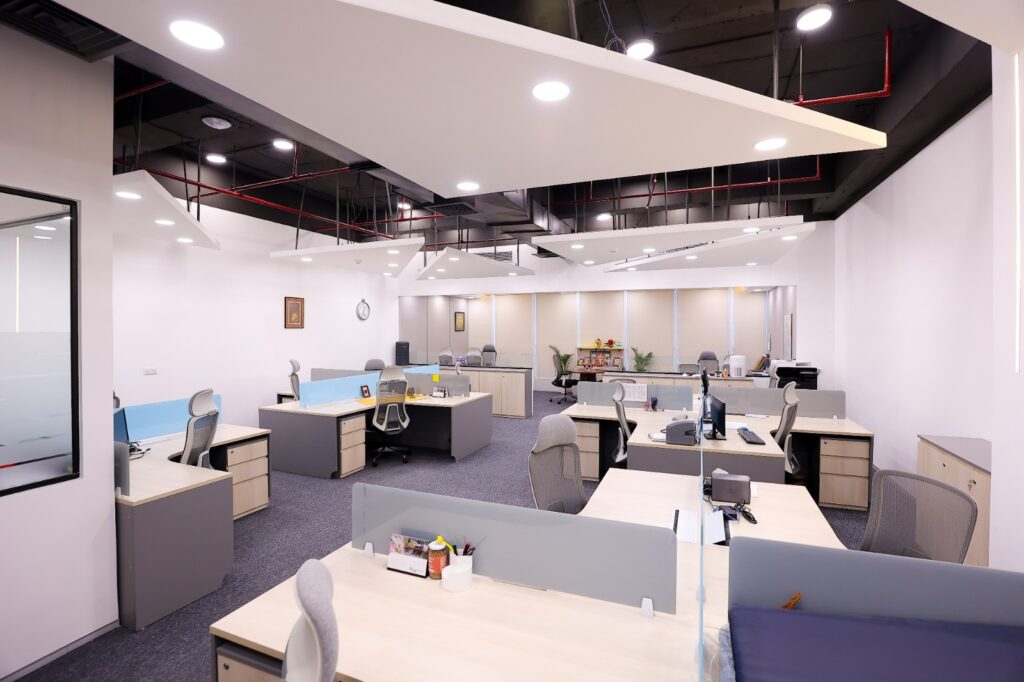
Smart offices are a result of the digital revolution that has reshaped how businesses function and how employees work. These workplaces are built around the idea of connectivity, automation, and adaptability, utilizing technologies such as the Internet of Things (IoT), artificial intelligence (AI), and cloud computing. Unlike traditional office spaces, smart offices are dynamic and responsive to the needs of users.
Lighting, temperature, and even furniture can adapt in real-time based on occupancy, individual preferences, or time of day. These technological upgrades create a more intuitive, efficient, and engaging work environment, allowing businesses to attract top talent and remain competitive in a fast-changing marketplace.
Benefits of Integrating Technology into Office Interiors
Integrating smart technology into office interiors brings a multitude of benefits, starting with greater efficiency and productivity. Automation of routine tasks, such as controlling lighting or managing meeting rooms, saves valuable time and reduces human error. Enhanced connectivity through wireless systems and cloud platforms facilitates smoother communication and collaboration, both within teams and across departments. Another critical advantage is energy efficiency.
Smart lighting and climate control systems reduce energy consumption by responding to occupancy and external conditions. Additionally, smart offices contribute to employee well-being by allowing individuals to personalize their environment adjusting lighting, temperature, or noise levels for comfort, ultimately fostering a happier and more productive workforce.
Key Technologies in Smart Office Interiors
Smart office interiors harness advanced technologies to create environments that are efficient, intuitive, and optimized for modern work. These solutions not only support productivity but also promote health, collaboration, and sustainability. By embedding intelligence into the very fabric of workspace design, businesses can offer a seamless user experience across all touchpoints.
Core smart technologies include:
- Smart lighting systems
- IoT-enabled furniture
- Automated HVAC systems
- Wireless charging stations
- USB-integrated desks
- Smart screens and digital whiteboards
Together, these tools work in harmony to deliver a high-performance, future-ready office environment.
Design Principles for Tech-Integrated Workspaces
Designing a smart office requires more than installing the latest gadgets; it’s about strategic integration of technology with space planning. The first principle is functionality, technology should serve to enhance the daily activities of employees without creating clutter or distraction. Office layouts must be flexible and modular, with zones designed for focus, collaboration, and relaxation.
These zones should be equipped with appropriate tech support, such as video conferencing in meeting pods and noise-cancelling systems in quiet zones. Data-driven insights, such as occupancy heat maps, should inform decisions about furniture placement and room usage. Aesthetic harmony is also key tech components should blend into the environment, creating a modern but warm and human-centric atmosphere.
Creating a Hybrid-Ready Smart Office
The rise of hybrid work has shifted the focus to creating office environments that support both in-person and remote collaboration. Smart interiors address this by offering features like hot-desking systems, which allow employees to book workspaces via mobile apps, and meeting rooms equipped with advanced video conferencing tools for seamless communication across locations.
Digital check-in systems and contactless access control make navigating the workplace safe and efficient. Additionally, companies can implement workspace analytics to understand how often spaces are used and tailor the layout accordingly. In a hybrid setting, smart design ensures that remote workers stay connected and engaged, while on-site employees enjoy a tech-enhanced, agile workplace.
Sustainability Meets Smart Technology
Smart office design also supports sustainability efforts by integrating energy-saving technologies and promoting eco-friendly practices. Smart lighting systems automatically turn off when rooms are vacant, while climate control adjusts in real-time to reduce unnecessary cooling or heating. Materials used in tech-integrated furniture can be sourced sustainably, and automated waste management systems ensure recycling is handled efficiently. Beyond reducing utility costs, these measures also help companies meet environmental standards and appeal to socially conscious employees and clients. Smart interiors allow companies to track and monitor their carbon footprint, encouraging continuous improvement in energy and resource management.
Cybersecurity in Smart Office Design
While smart offices offer advanced connectivity and functionality, they also introduce new vulnerabilities if cybersecurity is not integrated into the design process. Every connected device be it a smart light, camera, or thermostat, can become a potential entry point for cyberattacks. Secure network architecture, strong encryption, and firewalls are essential components of a smart office. Additionally, businesses must establish strict access control policies, conduct regular software updates, and provide cybersecurity awareness training for employees. Designing a secure smart office means ensuring that convenience and connectivity do not come at the cost of data privacy and digital safety.
Future Trends in Smart Office Interiors
Smart office design continues to evolve rapidly, integrating next-generation technologies that enhance efficiency, personalization, and inclusivity. As organizations look to future-proof their workspaces, several key trends are emerging that will define the modern office environment.
These trends focus on creating adaptive, responsive, and secure workplaces that align with both employee expectations and operational goals.
Key trends to watch include:
- AI-powered personalization
- Touchless technologies
- AR and VR integration
- Neurodiversity-inclusive environments
- Blockchain for secure operations
- Sustainability through smart tech
By adopting these innovations, businesses can build forward-thinking office interiors that are resilient, tech-enabled, and ready for the future of work.
Conclusion: A Smarter Office Is a Stronger Business
Smart office interiors are no longer a luxury, they are a vital asset in a tech-driven business landscape. By integrating intelligent systems into the core of workplace design, businesses can achieve new levels of productivity, sustainability, and employee satisfaction. From IoT-powered desks to AI-enhanced collaboration, each element of AI-powered smart office design serves a greater purpose: building a workplace that is responsive, flexible, and future-proof. Organizations that prioritize innovation through smart interiors not only strengthen their operations but also position themselves as leaders in the modern business ecosystem.